
Why Sweden Is Bringing Books Back Into the Classroom
Blogpost
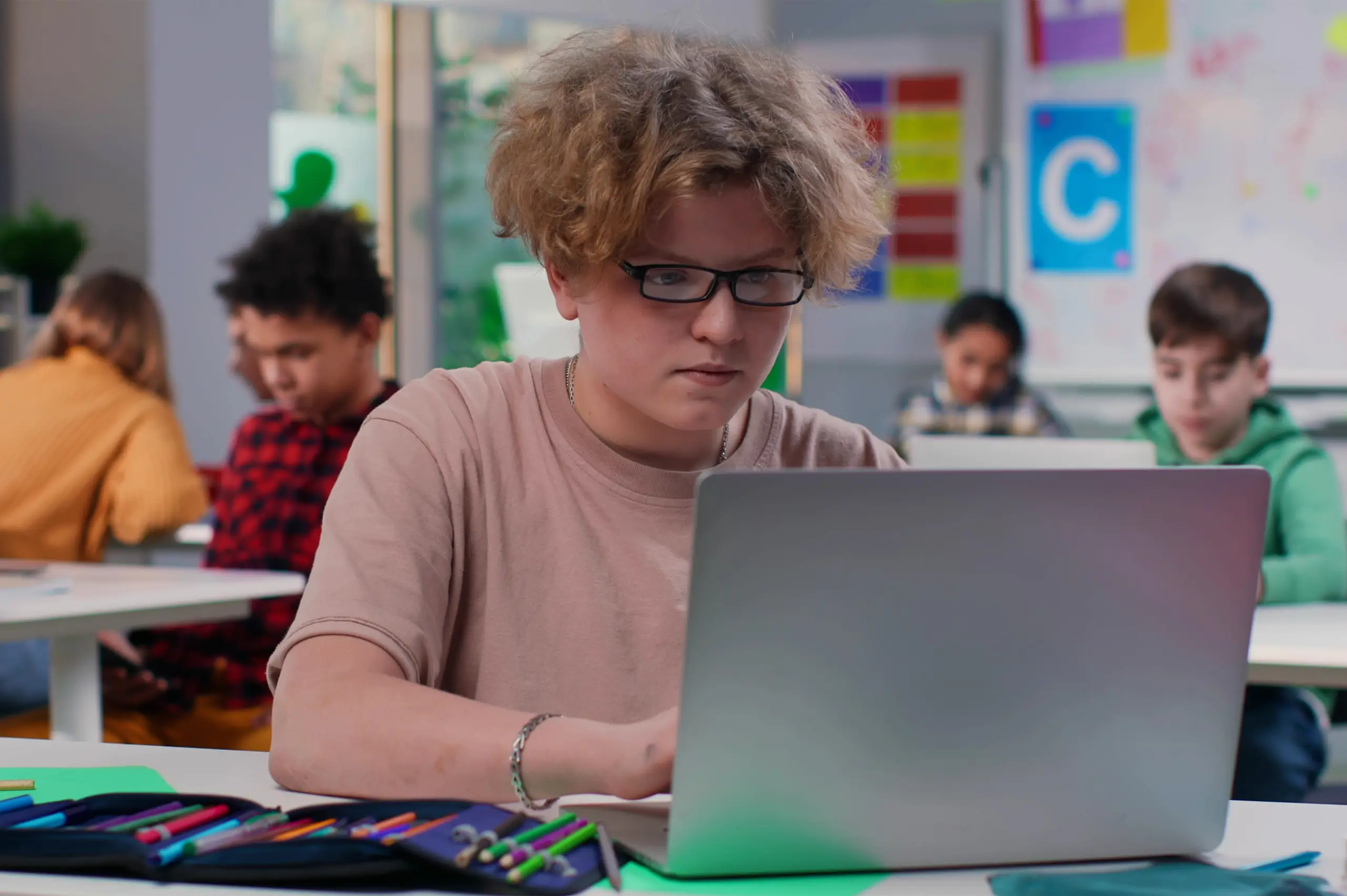
For years, the direction seemed obvious: more technology in classrooms meant better education. Sweden went further down that road than many countries, with digital tools becoming a normal part of learning from preschool onward. Then Sweden looked at the data and started moving in a different direction.
This wasn't a ban on technology or a return to education from another era. Instead, Sweden began putting more emphasis on printed books, reading, handwriting and analogue learning, particularly for younger children. The interesting question is why?
Several figures help explain why Swedish education authorities began paying closer attention. Fourth-graders were spending around 40 fewer hours per school year on reading activities than in 2011. Sweden's PISA reading score fell 19 points between 2018 and 2022. In PISA 2022, 36.9% of Swedish students reported digital-resource distraction in most or every mathematics lesson. At the same time, the Swedish Government allocated approximately SEK 2.65 billion to textbooks and teacher guides across 2023–2026.
These figures don't prove that screens caused falling educational performance. They do show why Sweden had reasons to reconsider an assumption that had shaped education policy for years: that making learning more digital would automatically make it better.
Swedish children still perform relatively well internationally, but the direction worried education authorities. In PIRLS 2021, which measures fourth-grade reading, Sweden's performance declined compared with 2016. More importantly, the difference between stronger and weaker readers increased, with lower-performing students losing more ground. Skolverket
PISA showed a similar warning among older students. Swedish 15-year-olds scored 487 points in reading in 2022, down 19 points from 2018. Sweden remained above the OECD average, so this isn't a story about a failing education system. It's about a strong education system seeing an undesirable trend and responding to it. Skolverket
Then another number caught my attention. Skolverket's 2026 analysis found that fourth-graders spent more than one hour less per week on reading and reading activities at school in 2021 than in 2011. Across a school year, that's approximately 40 fewer hours of reading, roughly an entire working week. Skolverket
This is where the story often gets oversimplified. Sweden has not proved that screens caused falling reading scores. The pandemic, socioeconomic differences, changing reading habits and the amount of reading happening outside school all matter. Education rarely gives us one clean cause.
Digital distraction, however, was measurable. OECD data from PISA 2022 showed that 36.9% of Swedish students reported digital-resource distraction in most or every mathematics lesson, compared with an OECD average of 30.5%. The data doesn't establish that devices caused lower achievement, but it does show that digitalisation introduced another factor competing for students' attention. OECD
That changes the question. Instead of asking whether schools should use technology, perhaps the better question is: when does technology actually help a child learn?
Sweden's response wasn't symbolic. The Government allocated SEK 685 million in 2023, SEK 658 million in 2024, SEK 755 million in 2025 and SEK 555 million in 2026 specifically for textbooks and teacher guides. That's approximately SEK 2.65 billion across four years. Sweden also strengthened pupils' legal access to textbooks and other learning materials, with changes to the Education Act taking effect in July 2024. Government of Sweden
For younger children, the change went further. From July 2025, digital learning tools were no longer required in preschool. Sweden's revised preschool curriculum states that learning tools should primarily be analogue, while placing greater emphasis on reading aloud, language development, movement and play. Technology hasn't disappeared; its role is simply being reconsidered. Skolverket
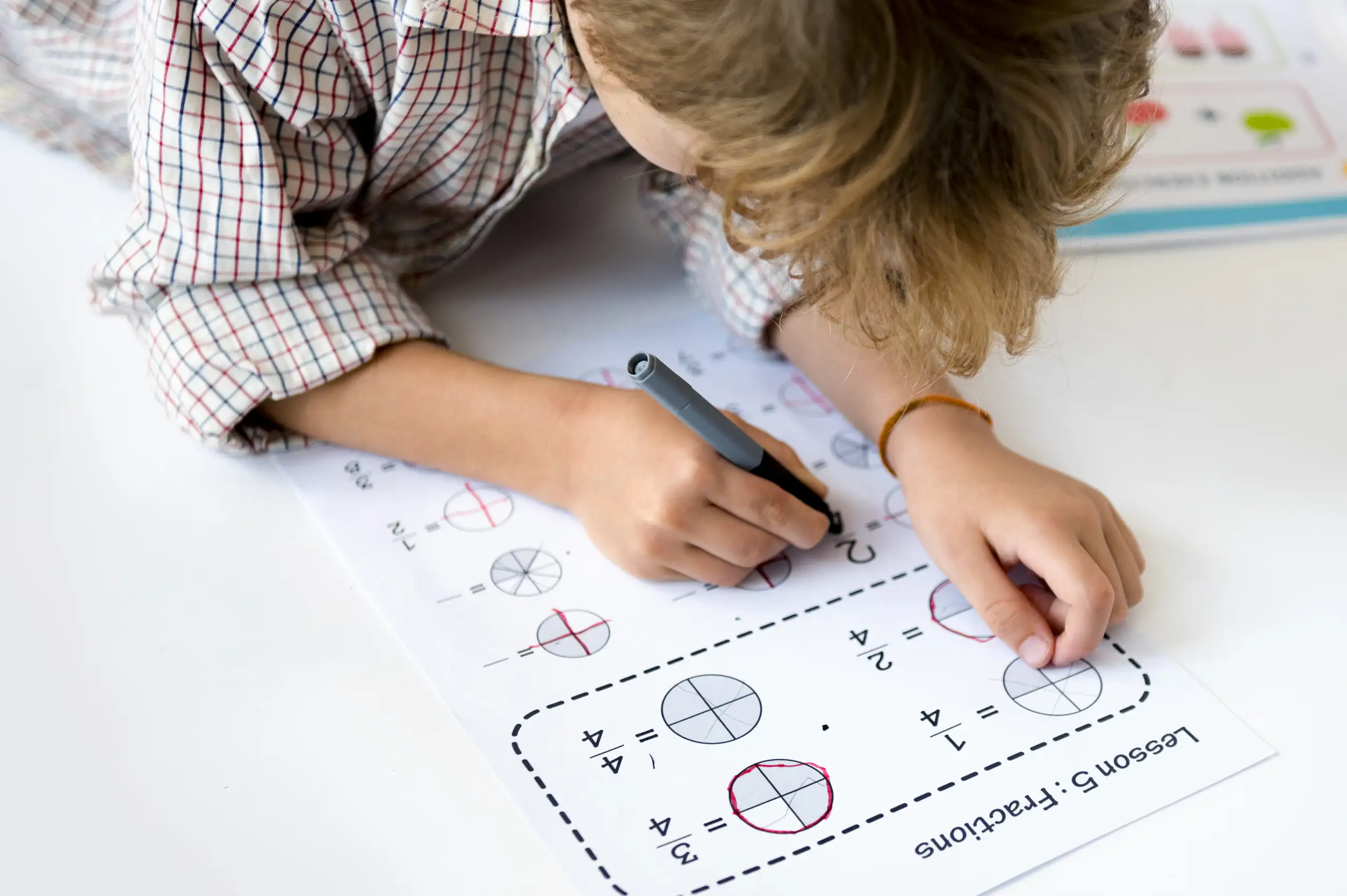
This part is particularly interesting when you design materials for young learners. Writing a single letter looks simple, but the child has to remember its shape, plan the movement, control the pencil, coordinate the eyes and hand, monitor what appears on the page and recognise the slightly imperfect letter they have created. Several perceptual, motor and cognitive processes are working together.
Typing is a different experience. The child finds A, presses A, and a perfectly formed A appears. Recent experimental research involving 50 prereaders found that children learning letters and pseudowords through handwriting achieved higher accuracy in subsequent tests than children learning through typing. That doesn't mean keyboards are bad. It suggests something more interesting: the physical act of writing may itself be part of learning. PubMed
This is what makes Sweden's story useful rather than ideological. Digital tools can provide immediate feedback, accessibility, adaptive practice, animation and experiences that print cannot provide in the same way. Print has different strengths, particularly when the learning activity involves sustained reading, handwriting, annotation or focused practice.
For curriculum publishers, the implication is straightforward: the format should follow the way a child needs to learn. A digital lesson shouldn't simply be a textbook page placed behind glass, and a printed student book shouldn't simply be content poured onto paper. Both need to be intentionally designed around what the learner is actually doing.
It's still too early to say whether Sweden's recent policy changes will improve national reading performance. Many of the reforms only took effect in 2024 and 2025, and Sweden's PIRLS 2026 results are expected in 2027. That makes Sweden an education system worth watching rather than a finished success story. Skolverket
But the question Sweden is asking already matters for anyone creating curriculum:
Not “Can we make this digital?” but “How will this child learn best?”


